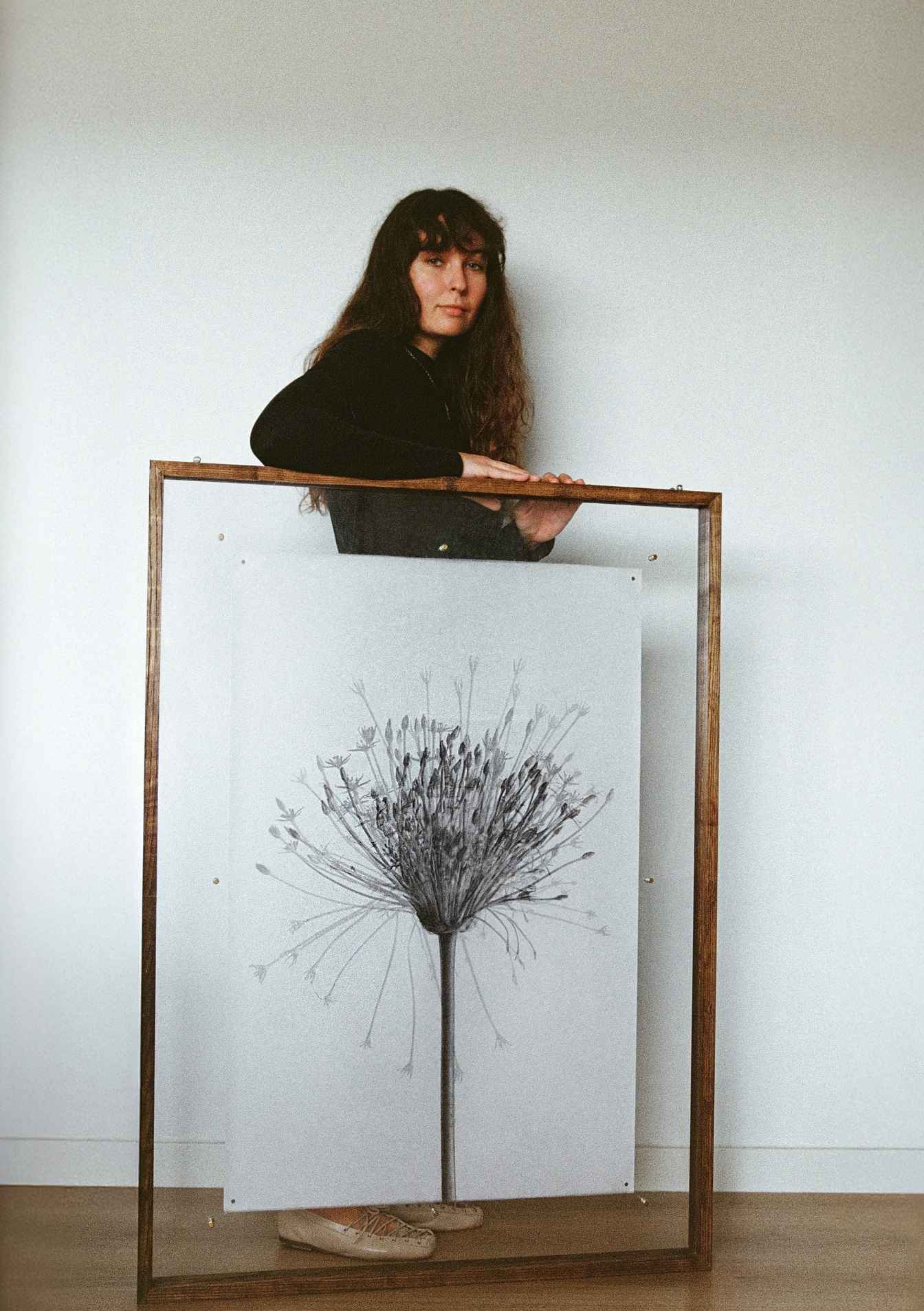
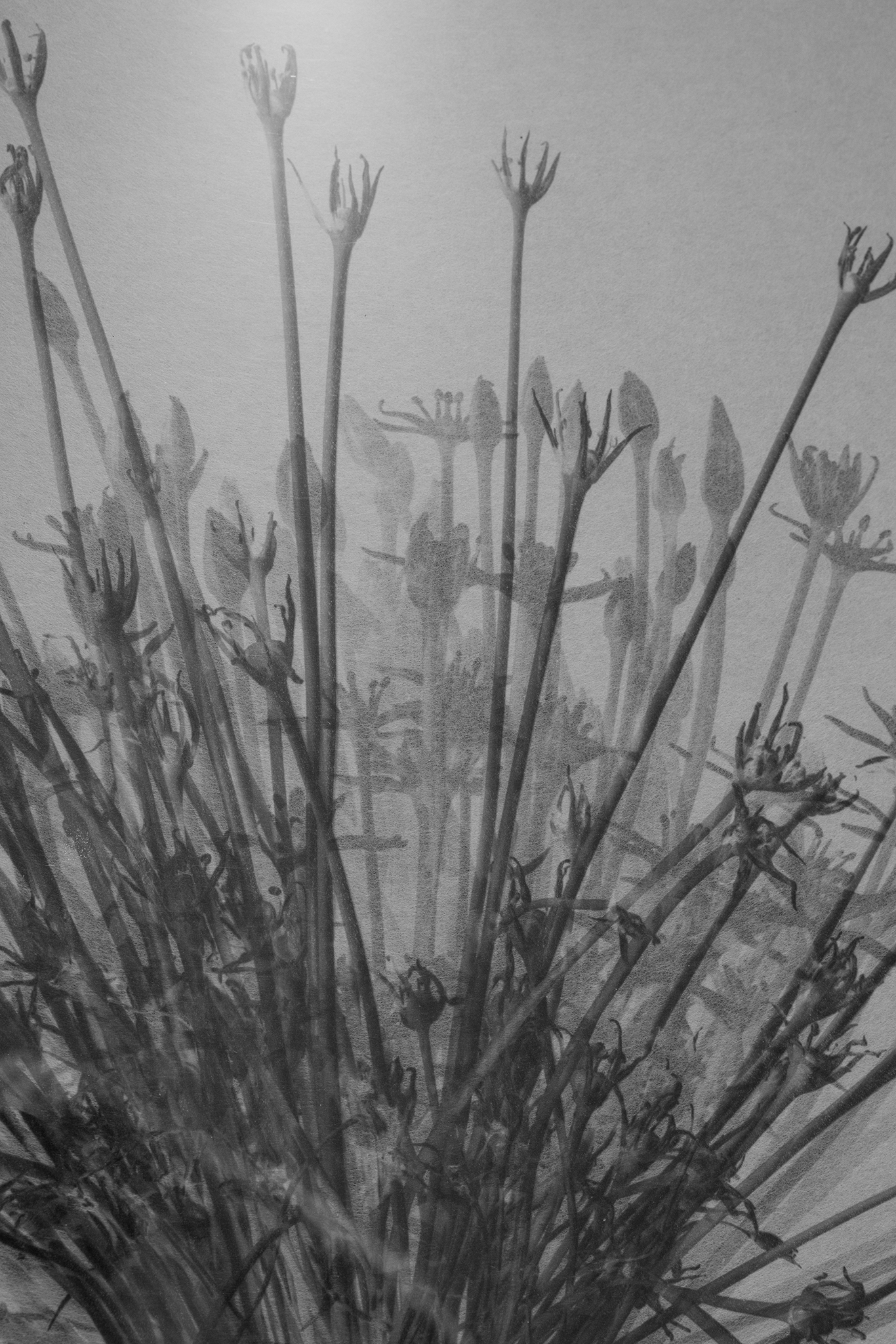

Kamila Solarz observes flowers as they change. In her photographs, this process of transformation becomes a way of exploring the passage of time, but also memory and the bonds. Originally from Poland and now based in Barcelona, her work moves between analogue and digital photography, with a particular focus on materiality and the physical dimension of the image. On the occasion of the presentation of her work Cycles at RI HOUSE, we spoke with her about respecting natural rhythms, as well as the small rituals that, beyond the places themselves, shape our relationship with space.
WHAT DID YOU DISCOVER BY OBSERVING THE TRANSFORMATION OF FLOWERS?
Observing flowers for months without intervening, returning each day to see how they had changed, has been a profound learning experience for me. It taught me to have great respect for natural rhythms, which we as human beings are also part of, even if we sometimes forget it. At the beginning of this process, I would often find a flower and immediately imagine how it was going to transform — only for it to teach me a lesson by not opening at all. Flowers taught me to appreciate every stage of the process: not only the blooming itself, but what comes before and what happens afterwards. I began to see the process as cyclical, where nothing disappears but simply changes form.
OBSERVING AND LISTENING ARE ESSENTIAL TO THE CREATIVE PROCESS… WHAT INSPIRES YOU IN YOUR SURROUNDINGS?
My greatest source of inspiration is nature. It is inexhaustible, a point of reference that always brings me a sense of calm. I have lived in Barcelona for the past seven years, although I am originally from Poland, and the combination of the different energies and characters of nature in these two places has had a strong influence on both me and my work. Mediterranean landscapes bring lightness and movement, while Polish landscapes have a particular sense of intimacy, of roots. I am also deeply inspired by people’s stories: what lies behind each form of creation, the stories and emotions it contains, and the breadth of human experience.
WHAT REMAINS OF THE WOMEN IN YOUR FAMILY IN THE WAY YOU SEE?
In my family, the garden has always been a very important place for the women. My great-grandmother, my grandmother and my mother have all spent, and continue to spend, a great deal of time there. It is like a small oasis, a place closely connected to memory and to the lives of several generations of women in my family. I think each of them, in her own way, has passed this language of flowers on to me, and somehow it is also present in the way I see.
HOW IMPORTANT IS MATERIALITY IN YOUR WORK?
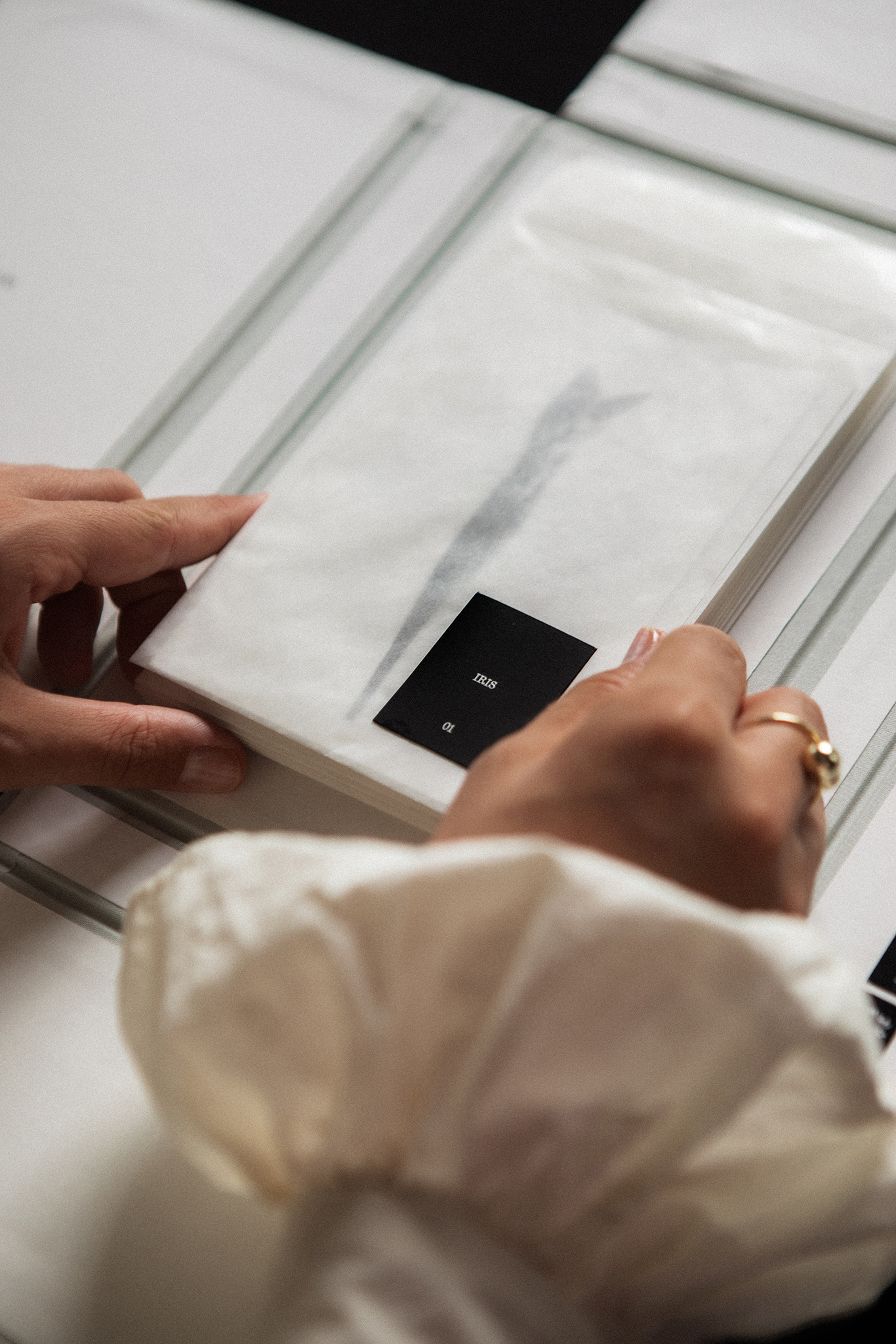
I see photography not only as an image, but as an object. Materiality therefore becomes the starting point for form, a means of expression, something that shapes the process.
WHAT IS YOUR SPACE LIKE, THE SPACE YOU LOVE?
Rather than a physical space, I think of moments and the emotions experienced within them. The smell of coffee in the morning, my dog following me around. I have moved more than a dozen times in my life and, although the places change, at this point I do not feel such a strong attachment to them. It is the small rituals that remain, regardless of the space. And light — light is the most important thing in how I experience a space.


